PT-141 remains in the blood for a short time
The drug began after a tanning study brought an unexpected sexual effect. Its label says the blood level falls by half in about 2.7 hours.
The blood level fell by half within hours
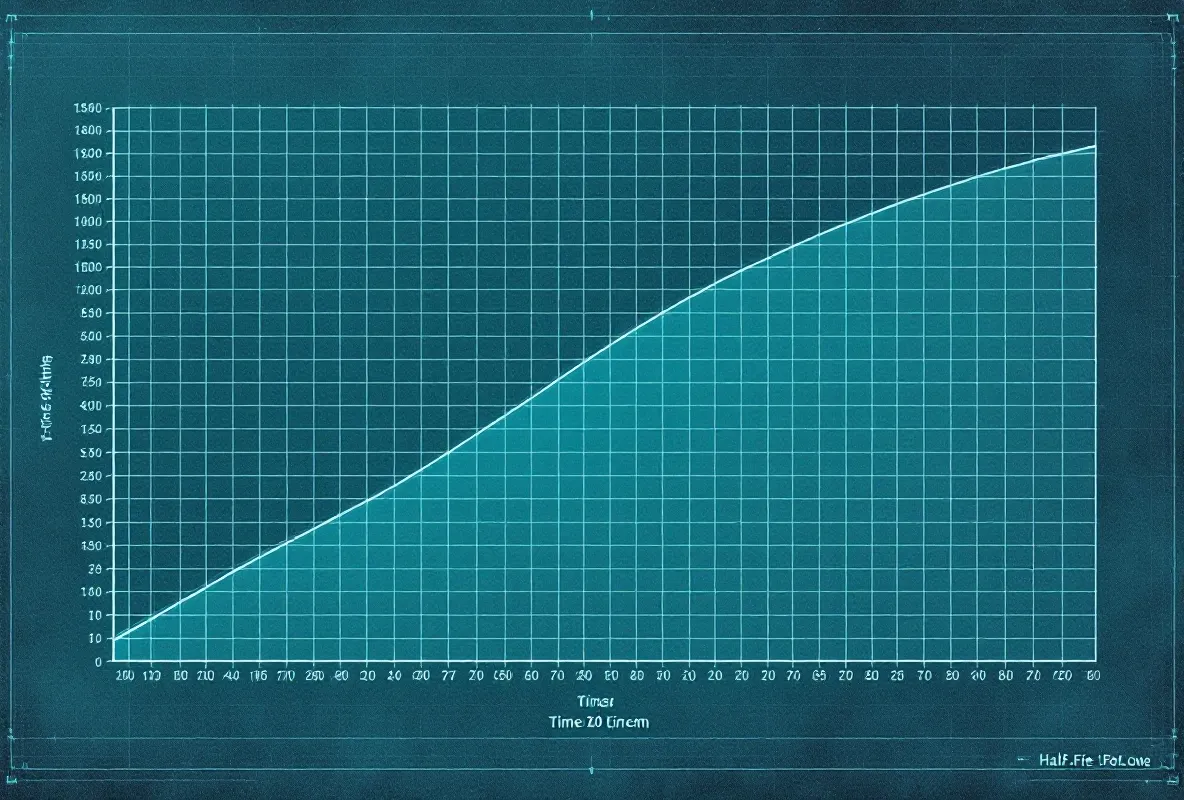
Researchers made PT-141 after a tanning study showed a sexual effect, then measured how long it remained in blood. After a shot below the skin, half-life is the wait until only half the original amount remains in blood. That wait was about 2.7 hours, with times from 1.9 to 4.0 hours among the people studied [7]. The drug reached its highest blood level within half an hour to one hour. Most had left the blood within a day [7].
Because the amount falls fast, the label uses the drug when needed instead of daily. The blood-pressure effect also passes quickly [7]. The next sections explain what the other label findings mean for you.
PT-141 half-life begins after a quick rise
After a shot just below the skin, only half as much drug remained in blood about 2.7 hours later. The study range was 1.9–4.0 hours [7]. A nose-spray study found a shorter time of 1.85–2.09 hours [7]. After the shot, the blood level reached its high point in about 0.5–1.0 hours [7]. Put simply, the drug reaches your blood quickly and leaves quickly.
The body breaks the drug into pieces and sends them out
The label says the drug spreads through body fluid and leaves blood at a measured rate [7]. These figures track medicine; your body isn't losing liters of fluid. About 21% travels attached to blood proteins. This shows how the drug rides in blood, not its safety [7]. The body cuts the peptide into small parts, so few drug clashes are expected [7][10]. A tracing study found most in urine and some in stool. Those routes did not account for the whole dose [7].
How long does PT-141 last has two answers
PT-141 stays in the blood for less than a day. After about five half-lives, or roughly 13–14 hours, very little remains [7]. Women in a scan study still reported more desire 24 hours after one dose [5]. That response may outlive the drug's time in blood. For you, the answer depends on whether you mean blood level or desire in that study.